




Drones and security issues
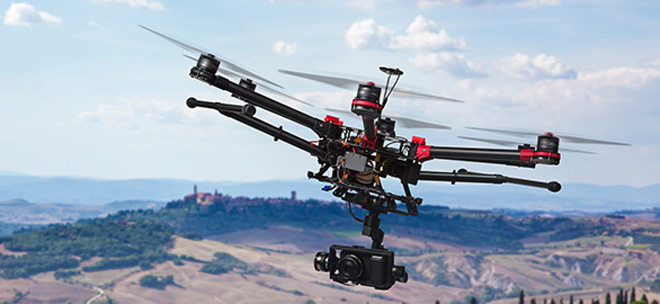
Unmanned Aerial Vehicles (UAVs), also known as Drones, are autonomous flying vehicles that do not require a pilot in the cockpit. Previously, this device was mainly used in military applications. However, due to the influence of the 4.0 technology wave, they are more widely applied for civil purposes, especially in television, geography, and space engineering. The drone market is therefore growing rapidly, leading to the emergence of commercial drones.
Undeniably, the existence of drones has created a completely new method of monitoring-approaching-information gathering with advantages such as: easy operation even in remote areas. complex model, useful in emergency situations, saving production and maintenance costs, limiting the casualty rate in combat... However, the use of drones is spontaneous as well as lack of rigor In the management of possession of this type of equipment, there will be many unpredictable risks affecting social order, safety and national security.
When operated in a residential area, drones can crash or collide with people, vehicles, power lines, or infrastructure. Flycams (a type of drone equipped with a camera) have even become a privacy obsession because they can be used to secretly film and spy on technology. More worryingly, due to a payload of up to several kilograms, drones become a smuggling tool to help transport banned substances, weapons, drugs... Most seriously, hostile forces can use drones. drive to infiltrate, monitor government agencies and military areas; carrying out terrorism (dropping bombs, chemical agents or biological agents...); distract and riot the crowd; spread propaganda leaflets against the state.
Therefore, in addition to tightening the legal corridor, it is necessary and urgent to research and provide technical solutions to detect and suppress unmanned aerial vehicles, not only in Vietnam but also in Vietnam. all around the world.
Methods of detecting drones
The first detection methods were optical or acoustic detection methods. People use cameras, binoculars, thermal sensors or super-sensitive directional microphones to detect the drone through thermal radiation or the sound emitted by the engine. However, this method is only capable of close-range detection, which is easily affected by the environment and weather conditions, so it has high errors.
Therefore, low-altitude radar is applied to detect drones. Radar operates on ultra-high-frequency, ultra-short-wavelength radio frequencies that radiate into space a narrow stream in the form of pulses. During propagation, radar waves encounter any target, they will reflect back. By analyzing wave velocity, reflection time; one can calculate the position and movement of the drone with high accuracy. However, the effectiveness of radar is limited in urban areas with many shields. Therefore, manufacturers have researched a new detection method based on the operating principle of the drone.
Drones are usually operated in two ways: (1) automatically flying along a preset route based on GPS coordinates; (2) fly on command from the ground control center in real time via radio transmission. So, to some extent, there is always a signal transmission between the drone and the GPS satellite or the control center. This is the key point for researchers to develop detection systems based on radio wave (RF) methods. This system uses highly sensitive radio receivers to collect the signal being transmitted to the drone. It can be said that this is the most effective method, helping to detect targets at long distances, less dependent on weather and surrounding environment and with high accuracy, suitable for deployment in many terrains.
Methods to suppress drones
There are 03 treatment directions outlined after detecting the intrusion of a drone:
- Destroying the target (destroying)
- Losing control of the target (jamming)
- Taking control of the target (spoofing).
Spoofing is considered the most optimal solution to deal with illegal drone intrusion. This method helps to interfere with the drone's control frequency band, then decode and demodulate the transmission protocol to gain control. However, this only exists in theory because there are currently almost no research firms able to break into the proprietary encryption of drone manufacturers.
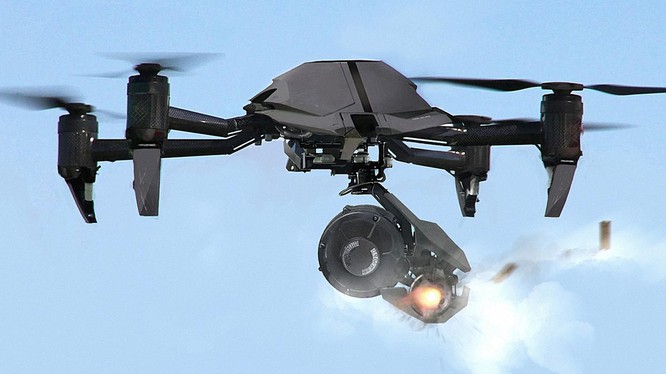
Meanwhile, destroying drones is the most rudimentary measure in the directions mentioned. Guards can use laser guns, missiles, training birds or drones to shoot down or hit targets. Although easy to implement, this measure is quite expensive, passive and does not solve the root of the problem if the drone is being used for the purpose of causing riots, terrorism or spreading anti-terrorism propaganda.
Therefore, jamming is considered as the safest, most effective and easy to implement solution being deployed in practice. First, radio-electronic systems are used to track drone targets. Then, use the drone gun or directional antenna system to emit a high-power and suitable frequency RF beam towards the target drone, jamming the control wave. Drone after losing control signal will return to the original starting position or have to land on the ground vertically.
Conclude
Each of the above detection and suppression methods has its own advantages and disadvantages. In order to improve the effectiveness of protection against drone attacks, a skillful combination and support of different methods is required.


